Showing posts with label The Guardian. Show all posts

Friday, 17 April 2009

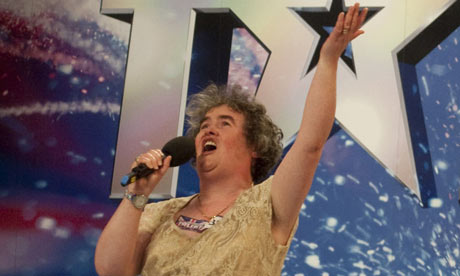
Britain's got issues with the representation of females

Tanya Gold: It wasn't singer Susan Boyle who was ugly on Britain's Got Talent so much as our reaction to her |
Comment is free |
The Guardian


As a follow up to my recent posting about online Britain's Got Talent sensation, Susan Boyle, I'd recommend reading the following Guardian article by Tanya Gold.

In it Gold attacks the negative representation of women in the British media, although I suspect her views are applicable to many other Western media outlets.

It's one the key themes developing in an age of rapid content delivery across numerous platforms on a global scale - how can we ensure that groups and individuals are represented fairly and without malice?

One of the issues that concerns me is the education of parents about controlling web access by their children. While many people may feel that such control is a form of censorship, I'd argue that it's a form of educational protection.

Not infrequently I am shocked by the content students talk about, or try to show me on their iPods or mobile phones. What they find amusing, having been persuaded by unmediated opinion from their peers, is in fact cruel, spiteful and degrading.

If parents and teachers shy away from confronting the darker side of web content, out of embarrassment or concerns for individual liberties, then we should not be surprised to find that subsequent generations, upon whom we will rely in later years, turn out to be far less tolerant and understanding than ourselves.

Wednesday, 18 March 2009

The Business of the Web is the business of Free


Details from the Guardian of a fascinating interview with Chris Anderson, the Wired editor-in-chief, about the changing economics of online business. He also has some interesting thoughts on how all businesses might change, offering a free version of a company's software or content, with a premium option that appeals to only 5% of the target audience, and for which there's a payable premium.

Given the way web usage culture is emerging, especially amongst younger users, there are some poignant observations made.

Read all about it here.

Monday, 16 February 2009

The advert is blowin' in the wind


A rare treat for lovers of Bob Dylan's music. 

The reclusive singer has allowed British ethical company, The Co-Operative, to use his iconic song, Blowin' In the Wind, in a forthcoming TV advert. You can watch it here.


Thursday, 5 February 2009

Media exposure, the Cinderella effect, and a tale of epic Greek proportions

Image (c) Rex Features

Jade Goody rose to fame as the face of a leering, ill educated section of British society. She rose to prominence in 2002, when she appeared on the reality TV show Big Brother. 

Since then, her life has been lived in the full glare of the tabloids. Now she has cancer and it seems to be terminal. Yet still the TV cameras are rolling. It's a messy, tragic, horrible business, and my heart goes out to this 27 year old mother, facing the cruellest of fates.

Yet, there is something about this voyeuristic journey that leaves me with a sense of deep disquiet. My sentiments are best mirrored in this excellent article from the Guardian.

Monday, 22 December 2008

The Last Year for CD sales?


There's an interesting report from Gartner, the respected media analysis company, saying that we are approaching a time when the CD will die out as a mainstream delivery option for music.

The format had seen sales rise as audiences attempted to avoid digital rights management (DRM) software, that prevented them from making multiple copies of downloaded data.

However, the rise of sites offering DRM free music, including Amazon, means that this is becoming less of an issue.

Might we see the CD as a promotional tool, published only on demand?

Click here to read more.

Thursday, 18 December 2008

A connected world brings sweet music


The rise of social web networking surely must mean that the Six Degrees of Separation theory has become more realistic than ever before?

I pose the question because of a small chain of events that happened today. It goes like this:

1. I read an article on the Guardian website, revealing that Jonathan Ross has started using Twitter, the micro blogging site, where users can post short SMS-type updates on what they're doing.

2. I go to Jonathan's Twitter site and post a response to his question, 'which song should I play first when I return to radio presenting in the New Year?' Remember that Ross and comedian Russell Brand found themselves in hot water earlier in the year, when they left obscene messages on the answerphone of the actor Andrew Sachs. Brand quit his BBC Radio 2 job and Ross was suspended for 12 weeks.

3. My post is picked up by a band I've not come across before,  Georgia Wonder. They start to follow my postings.


4. I get a link from their Twitter page to a website offering bands the chance to find an audience and build a relationship - Reverbnation. Following a brief registration process, I am able to download a handful of songs by Georgia Wonder, and think they are fantastic. Now, I'm here, writing to you, to say that the band are well worth a listen. Reverbnation is worth checking out too. It's interesting because when you sign up, there's an option to become a 'street volunteer', handing out flyers etc, for the band you like. It's another example of how the virtual web is beginning to find ways to link audiences and producers together, via shared interests, in a physical sense. In a knowledge economy, financial reward isn't the only currency - free tickets, a sense of belonging and self-worth all acquire a transferable value.

5. Having completed this post I am going to post a link to it on Twitter and the Georgia Wonder website. This in turn might bring them and interested audience members to my blog. 

6. Who knows what contacts may arise as a consequence?

Friday, 12 December 2008

It's my party politics and I'll sing if I want to


A wonderful piece of journalistic sarcasm has swept across my path.

In the UK the Guardian newspaper represents the liberal left of the political spectrum (Labour Party), while the Daily Mail and Mail on Sunday, owned by Associated Newspapers, represent the right wing (Conservative Party).

An article on the Guardian website reveals, with some mirth, the fact that Associated are launching their own record label. 

As the article's author Paul MacInnes puts it, 'as if belonging to one industry with a death wish wasn't enough, now the Mail wants to get into another!'

It's true that newspapers face a challenging future, with an economic downturn, and increasing numbers of readers becoming online audiences for information, analysis and entertainment.

However, diversity isn't a bad idea, although it's a fair point to ask if a news publisher can cope with the challenges of the music industry - where most outfits with the exception of Apple have struggled to build a solid user base.

What made me smile though about the article were the many politically motivated comments that follow from readers; looking for song titles that the new record label could release.

A few examples: 
Nothing's Gonna Change My Dislike of the EU
It's the End of the World as we Know it (And I Feel Outraged)

Witty stuff to end a long Friday. Enjoy.

Monday, 1 December 2008

Moral Panics and Internet Paranoia

I must thank my student Leah for inspiring this post.

She's written on her blog about a video clip she found on YouTube , purportedly showing a Saudi Arabian footballer getting kicked in the head during a match and subsequently dying.

Leah, having been told to be wary of anything she reads online, especially when the text is based on unmoderated audience feedback, went off and dug around for the truth. 

Eventually, she discovered that the chap was fine and went on the play more professional football.

The point I wish to make is this: it's good academic practice to double check secondary sources and seek independent verification of claims. That goes for material read in a journal, for example, just as much as it does for material found online. 


The horrific attacks in Mumbai last week saw proponents of Twitter , the online service that allows users to post quick one-liners about what they're doing from mobile phones, PDAs and the like, to claim that this was the event that saw Twitter come of age as a news tool.

The issue is, of course, that what Twitter delivers isn't news. It's information. We need skilled journalists to make sense of all this data, to craft it into something that makes contextual sense to us, as an audience at one step removed from the drama that is unfolding. 

The immediacy of the web, and the ease with which moving and still images can be flashed around the world, gives the impression that we are right in the thick of the action. The reality, of course, couldn't be further from the truth. What we are witnessing at such times are multiple streams of complex material. This all amounts to a jumbled re-presentation of the actuality. A multi-camera angled jamboree of vision and noise, as it were. 

Searching around online for evidence of others feeling the same way as I do, I was impressed by the writing of technology journalist Om Malik. His posting about Twitter makes sound sense, and is worth a read.

Allen Stern , writing for Information Week, makes some more technical points about how the infrastructure of Twitter makes it hard for the software to work as a news filter. 

The Guardian has an interesting article that looks at how bloggers, and photo sharing site Flickr also provided additional information, as the tragedy in Mumbai unfolded.

So, where does this leave us? Newspapers still have a role to play, as the suppliers of intelligent analysis. Radio provides fast and intimate contact with those involved in events, while TV news can continue to help us make sense of what is becoming an increasingly complex, fragmented, yet seemingly inter-connected world. In between all of that, the range of web-based software communication tools will make inroads into the traditional roles of their predecessors, generating new ways of telling stories, shaping information, and challenging our assumptions about how communication between one and the many, or as is increasingly the case, between the many and the many, takes place. Now, what was it McLuhan said about the medium being the message??


Sunday, 16 November 2008

Back to Life, Baz to Reality


I like Baz Luhrmann films. I remember working as the producer of a film review show for a London TV station back in the 1990s. I received an invite to attend the preview of his version of Romeo and Juliet. I had no idea what to expect, but anticipated a somewhat saccharine movie.

At the time I liked to see at least one film a week about which I didn't read the PR blurb. It was fun sitting in a cinema auditorium, with no idea what was about to unfold. And since I was watching films before they'd made it to general release, I enjoyed the incredible privilege of not having friends or family spoil the plot for me. Oh no, that was my job....

I mention this because after a seven year hiatus, excepting the over the top, if remarkable, advert for Chanel, that in 2004 cost millions to produce, Baz is back.

His great epic, Australia, is due to open in the UK on Boxing Day, and has its world premiere next week. The only problem is - he hasn't finished editing it yet.

The press are having a field day over why the $120 million film hasn't been placed in the can and sent off for preview.

Only Oprah Winfrey and her audience have seen a cut of the film, and that was without all the special effects included.

Naturally, the rumour mills are working overtime. The main claim alleges that Fox has forced Luhrmann to change the ending from one that's tragic to one that's happy. 

Entertainment magazine Variety has been following the story. Oprah Winfrey has provided a behind-the-scenes video, which doesn't give away the plot, but provides a quick insight into the challenges facing a cast and crew of more than 300, who decamped into the Outback.

The Guardian features an interview with Baz Luhrmann, in which he explains what makes him produce films that go against the grain of contemporary thinking.

If the ending has been changed because of focus group feedback it'll be a real shame. However, if Luhrmann is making his alterations because of a desire to complete the narrative, in a way that he believes is artistically closer to the ideals he held dear, when he embarked on this adventure, then we should trust him to make the right call.

Critics are pointing out that Titanic et al did not have happy endings, but still went on to break Box Office records. If Australia has a narrative that offers a plausible ending at its conclusion, together with fine acting and lush cinematography, then the mood of the finale will not matter.

It's worth observing how even those at the top of their game can still feel the heat of indecision and doubt. Remember that the next time you find yourself stuck at a creative crossroads during A level coursework!


The Face behind the Book

Given how powerful Facebook has become it's strange that every interview I read with Mark Zuckerberg, the founder of the world's biggest social networking site, seems rather bland. 

Maybe it's the increasing presence of PR minders, sent to preserve the corporate brand image, or perhaps the guy is genuinely introverted in a techno-geek way, but he manages to give little away about his passion or vision, either when reflecting about the past or looking forward to the future.

Nonetheless, if it's titbits you're after then here's the latest offering, which has appeared in the Guardian.